Coastal Decor Ideas for Every Room That Feel Relaxed, Not Kitschy
Good coastal decor makes a room feel like the first deep breath you take after stepping onto the sand. It is light, easy, and a little bit sun-washed. Bad coastal decor looks like a souvenir shop exploded, with anchors on the pillows, “Beach Rules” signs on the wall, and a net full of plastic starfish over the door.
Designers have been saying this for a while. In a 2026 Livingetc piece on coastal design trends, South Carolina designer Alexandra Clark described much of coastal design as a copy-and-paste look that has barely changed in about 15 years. The fix is not to abandon the style. It is to use the coast as inspiration instead of a theme.
This guide shows you how. You will learn the main coastal styles and how they differ, the paint colors designers actually use, room-by-room ideas, and which materials hold up to humidity and salt air in a real beach house. You will also find what not to bring home from the beach, since collecting live shells and sea creatures is restricted or banned on many US beaches.
What Is Coastal Decor?
Coastal decor is an interior style inspired by the light, colors, and textures of the shoreline. Think sandy neutrals, soft blues and greens, bleached wood, woven fibers, and lots of natural light. The goal is a home that feels breezy and relaxed, whether it sits on the Outer Banks or in a Denver suburb.
It is not the same as nautical decor. Nautical style is about boats and sailing, with navy stripes, rope, brass, and anchors. Coastal style is about the beach itself. You can mix the two, but a little nautical goes a long way.
The main coastal styles compared
Most coastal homes you see online fall into one of these looks. Picking one keeps your shopping focused.
| Style | Colors | Signature pieces | Feels like |
|---|---|---|---|
| Modern coastal | Warm whites, sand, muted blue | Clean-lined sofas, oak, linen, abstract seascapes | An airy new beach house |
| Coastal grandmother | Cream, oatmeal, soft blue | Slipcovers, hydrangeas, stacks of books, ceramics | Nancy Meyers movie kitchen in the Hamptons |
| Hamptons | Crisp white, navy, gray | Shingle-style details, rattan, striped awnings | Long Island summer estate |
| California casual | Bleached neutrals, terracotta, sage | Low linen sofas, surfboards, plants, leather | A Malibu bungalow |
| Coastal farmhouse | White, weathered gray, blue | Shiplap, galvanized metal, reclaimed wood | A Carolina lowcountry cottage |
| Florida and tropical | Coral, turquoise, palm green | Palm prints, bamboo, cane, bright art | Palm Beach or Key West |
| New England nautical | Navy, red, white | Stripes, brass, rope, vintage maps | A Cape Cod saltbox |
The term “coastal grandmother” took off on TikTok in 2022, and it is still one of the easiest ways to describe a soft, lived-in take on the style. Modern coastal, with warm whites and natural textures, is what most designers are building right now.
The Coastal Color Palette, With Real Paint Colors
The classic coastal color palette takes its cues from sand, sea, sky, and dune grass. The modern version is warmer and softer than the bright white and royal blue of the early 2000s. Even Pantone leaned this way, naming Cloud Dancer, an airy off-white, its Color of the Year for 2026.
Designer-favorite coastal paint colors
| Paint color | Brand and code | What it looks like | Best use |
|---|---|---|---|
| White Dove | Benjamin Moore OC-17 | Soft warm white | Walls and trim throughout |
| Alabaster | Sherwin-Williams SW 7008 | Creamy white | Walls in bright, sunny rooms |
| Sea Salt | Sherwin-Williams SW 6204 | Gray-green with a hint of blue | Bedrooms and bathrooms |
| Palladian Blue | Benjamin Moore HC-144 | Airy blue-green | Living rooms and bedrooms |
| Rainwashed | Sherwin-Williams SW 6211 | Soft aqua-gray | Bathrooms and laundry rooms |
| Skylight | Farrow & Ball No. 205 | Pale, chalky blue-gray | Ceilings and small rooms |
| Hale Navy | Benjamin Moore HC-154 | Deep, classic navy | Kitchen islands, doors, accent walls |
How to pick the right shade for your light
Coastal colors shift a lot depending on the light. A blue-green that looks fresh in a south-facing Florida sunroom can look cold and gray in a north-facing room in Ohio. Order peel-and-stick samples from Samplize or the paint brand, stick them on two walls, and look at them in the morning, afternoon, and evening before you commit.
Warmer whites with a touch of yellow or red usually feel better in rooms with cool northern light. Cooler, cleaner whites work best in rooms that get strong southern or western sun.
Keep the palette to three or four colors
A simple formula works in almost any room. Use one warm white as your base, one sandy neutral for large fabrics and rugs, one soft blue or green for accents, and an optional deep navy or driftwood brown to ground the space.
Materials and Textures That Say “Coast” Without a Single Seashell
Texture does more to make a room feel coastal than any printed pillow. If you get the materials right, you barely need themed accessories at all.
Natural fibers
Jute, sisal, seagrass, rattan, wicker, and cane bring in the feel of dune grass and driftwood. Use them for rugs, baskets, headboards, lamp shades, and accent chairs. One practical note. Jute is soft and affordable but stains easily, while sisal is tougher and better for hallways and busy living rooms.
Light, weathered wood
White oak, ash, bleached pine, and reclaimed wood all work. Limewashed or cerused finishes, where white pigment settles into the grain, give that sun-bleached look. Mixing two or three wood tones feels more natural than a perfectly matched furniture set.
Breathable fabrics
Linen and cotton are the backbone of coastal textiles. They wrinkle, and that is part of the charm. For sofas and chairs that get real use, look at performance fabrics like Sunbrella, Crypton, or Perennials. They resist stains and fading, which matters in sunny rooms and homes with kids or dogs.
Stone, ceramic, and glass
Honed marble, travertine, limestone, and terrazzo feel cool and beachy underfoot. Handmade ceramic tile, such as zellige in white or sea-glass green, adds subtle shine to kitchens and baths. Clear or blue-tinted recycled glass vases catch light like water.
A quick texture rule
Aim for at least three different textures in each room. A linen sofa, a jute rug, and a rattan chair already feel coastal before you add a single piece of decor.
Coastal Living Room Ideas
The living room is where coastal home decor has the most room to breathe. Start with the big pieces and let the accessories come last.
Choose a slipcovered or light sofa
A white or oatmeal slipcovered sofa is the classic choice because you can wash the cover. If white makes you nervous, pick a sand, flax, or light gray performance fabric. Low, deep seats feel more relaxed than tight, formal cushions.
Layer rugs for texture
Put a large jute or sisal rug down first, then layer a smaller, softer rug with a faded pattern on top. The layered look adds comfort underfoot and hides wear in busy households.
Let the light in
Swap heavy drapes for sheer linen or cotton panels. Hang the rod 6 to 10 inches above the window frame and let the curtains just kiss the floor. The windows will look taller and the room brighter. Woven wood or bamboo shades add privacy with texture.
Use one big piece of art
A single large seascape, abstract in soft blues, or black and white beach photograph looks more intentional than a cluster of small signs. Look for work by local coastal artists or prints from galleries like Minted and Juniper Print Shop.
Bring the outdoors in
A potted olive tree, fiddle leaf fig, or palm in a woven basket adds life and height. Fresh hydrangeas in a glass jar are a coastal grandmother staple.
Accessorize with restraint
Pick a few meaningful objects. Try a bowl of sea glass you found yourself, a stack of books about favorite beaches, a vintage oar, or a piece of driftwood. Three thoughtful pieces beat thirty themed ones every time.
Coastal Bedroom Decor for Better Sleep
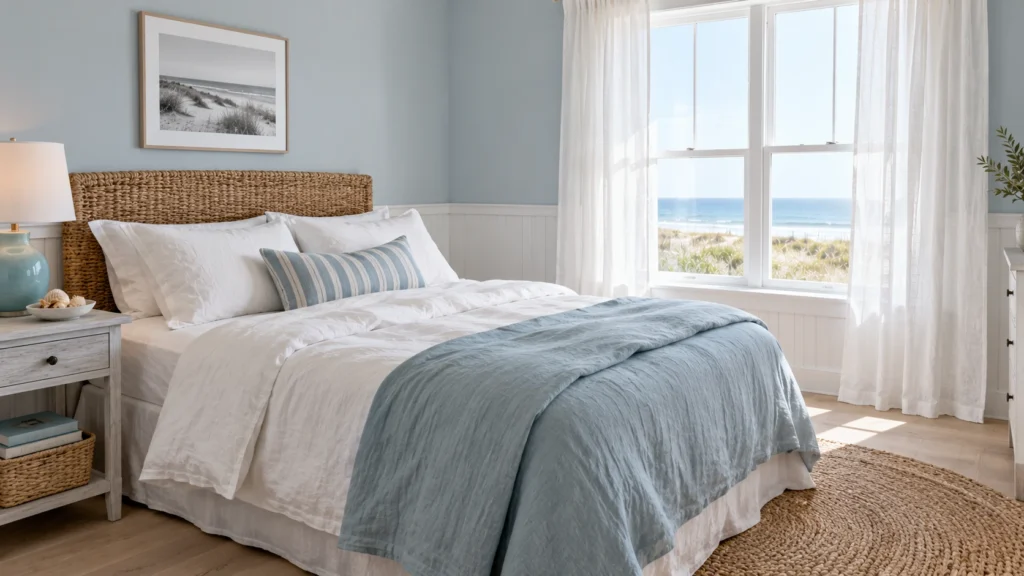
A coastal bedroom should feel like a vacation you never have to check out of. Soft colors, breathable fabrics, and very little clutter do most of the work.
Start with linen or percale bedding
Washed linen and cotton percale both breathe well, which helps on warm nights. That matters more than you might think. The Sleep Foundation notes that a cool bedroom, around 65°F, supports better sleep for most adults. Layer white sheets with a duvet in sea-glass blue, sand, or a soft ticking stripe.
Pick a natural headboard
Woven seagrass, rattan, cane, or a whitewashed wood headboard adds texture right where your eye lands. An upholstered linen headboard in oatmeal or pale blue is a softer option.
Paint the walls a calm, watery tone
Sea Salt, Palladian Blue, or a warm white keep the room restful. For more character, add white beadboard or board-and-batten wainscoting to the lower third of the wall. It feels like a classic beach cottage and hides scuffs.
Keep nightstands simple
One lamp, one small dish, and one book per side is plenty. A ceramic lamp in pale aqua or a woven lamp shade adds the coastal note without any themed objects.
Think about light control
Sheer curtains look beautiful but let in morning sun. Pair them with blackout roller shades mounted inside the window frame so you get both the breezy look and a dark room at night.
Coastal Kitchen and Dining Decor
Kitchens are expensive to change, so coastal kitchen decor works best when it comes from finishes and a few easy swaps rather than a full remodel.
Easy updates for any kitchen
- Paint the island. A soft blue-gray, sage, or Hale Navy island against white perimeter cabinets is a classic coastal move that costs a weekend and a gallon of cabinet paint.
- Swap the hardware. Unlacquered brass, polished nickel, or leather pulls feel relaxed and slightly nautical without shouting it.
- Add woven pendants. Rattan or seagrass pendant lights over an island instantly warm up a white kitchen.
- Display everyday pieces. White ironstone, blue and white dishes, wood cutting boards, and glass canisters on open shelves look coastal and are actually useful.
If you are renovating
White oak or painted shaker cabinets, a handmade tile backsplash in white or sea-glass green, and honed quartz or marble counters all fit the style. Wide-plank light oak floors, or a porcelain tile that looks like wood, hold up better than soft pine in a sandy beach house.
Setting a coastal dining table
A weathered wood or whitewashed farmhouse table pairs well with woven rush-seat chairs or slipcovered dining chairs. For the table itself, skip seashell centerpieces. Try a linen runner, a row of glass bud vases with herbs or white flowers, and simple white plates. Blue and white striped napkins add the only “beachy” note you need.
Coastal Bathroom Decor
The bathroom is a natural fit for coastal style because it is already all about water. It is also the room where cheap decor fails fastest, thanks to steam and humidity.
Finishes that look beachy and last
- Tile with movement. Zellige, handmade subway tile, or glass mosaic in white, aqua, or soft green reflects light like a tide pool.
- Beadboard or shiplap, done right. Both look great in coastal baths, but use PVC or moisture-resistant MDF versions near tubs and showers, and seal all edges with a semi-gloss or satin paint.
- Warm metal accents. Brushed brass or polished nickel faucets and mirror frames feel softer than chrome.
Small swaps that change the whole room
Start with fluffy white Turkish cotton towels and a striped or waffle-weave hand towel. Add a woven hamper, a teak shower stool or bath mat, and a round mirror with a rope or rattan frame. A small plant like a pothos or fern loves bathroom humidity.
Skip these
Shell-covered toilet seats, fish-shaped soap dishes, and mermaid wall signs date a bathroom quickly. If you love shells, put a few favorites in a clear glass jar on the counter instead.
Keep moisture in check
Run the exhaust fan during every shower and for about 20 minutes after. It protects paint, grout, and any natural-fiber decor from mildew.
Entryways, Porches, and Outdoor Spaces
The first and last places you see in a home set the mood. At the beach, they also take the most abuse from sand, wet towels, and sun.
A hardworking coastal entry
A mudroom-style entry keeps sand from spreading through the house. Try a bench with baskets underneath for flip-flops, wall hooks for towels and beach bags, and a washable indoor-outdoor rug. A striped runner or a coir doormat looks right at home. If you have space outside, an outdoor shower or even a simple foot-rinse spigot saves a lot of sweeping.
Porches and patios
White or natural rocking chairs, a porch swing, and a haint blue porch ceiling are Southern coastal classics. That pale blue-green ceiling color comes from Gullah Geechee tradition in the Lowcountry of South Carolina and Georgia. Many people also say it helps keep wasps and mud daubers from nesting, though that part is more folklore than science.
Outdoor furniture that lasts
Choose teak, powder-coated aluminum, or high-quality synthetic wicker for frames. Pick cushions covered in solution-dyed acrylic fabric, which holds color in strong sun far better than printed polyester. Store cushions or use covers during storms and the off-season to add years to their life.
Coastal Wall Decor and Accessories That Feel Personal
Coastal wall decor is where rooms most often slide into kitsch. The fix is to choose pieces that suggest the coast rather than spell it out.
Wall decor ideas designers actually use
- Large-scale art. Abstract seascapes, cloud studies, or vintage-style botanical prints of sea grasses and seaweed.
- Photography. Black and white or faded color shots of a beach you love, printed large. Your own vacation photos work beautifully here.
- Vintage charts and maps. A framed NOAA nautical chart of your favorite harbor or coastline is personal and classic. NOAA offers free chart downloads you can have printed.
- Woven and natural pieces. Rattan or seagrass wall baskets arranged in a cluster, or a large round mirror with a jute or driftwood frame.
- Textile art. A framed piece of vintage indigo fabric or a woven wall hanging in sand and blue tones.
Pieces to use sparingly or skip
Word signs like “Life’s a Beach” or “Salty Air,” fish netting with plastic starfish, oversized anchors, and life preserver rings rarely age well. If a piece makes sense in a gift shop but not in a nice hotel room, leave it on the shelf.
What not to bring home from the beach
Collecting your own treasures makes decor feel personal, but there are real rules to follow.
- Never take anything alive. In Florida, the Fish and Wildlife Conservation Commission bans taking most shells with live animals in Lee County, home of Sanibel Island, and limits it in Manatee County. Elsewhere in the state, taking a live shell requires a saltwater fishing license.
- Check before you collect in parks. Harvest may be limited or banned in state and national parks, wildlife refuges, and parts of the Florida Keys National Marine Sanctuary. Rules vary by site, so ask a ranger.
- Pass on real coral decor. NOAA explains that the US imports tons of dead coral for home decor each year, adding pressure on reefs already struggling with climate change and pollution. Choose ceramic, resin, or glass coral look-alikes instead.
Empty shells, sea glass, and small pieces of driftwood are usually fine to take where collecting is allowed. Display them in a glass jar, a shallow bowl, or a shadow box with the date and beach written on a small card.
Coastal Style Far From the Beach, on a Budget, or in a Small Space
You do not need an ocean view to pull off coastal home decor. Some of the best coastal rooms are in apartments in Chicago or ranch houses in Texas.
When you live inland
Lean on light and texture more than themes. A warm white room with linen, jute, and light wood reads as coastal anywhere. Adapt the palette to your climate too. In a snowy region, warmer sands and driftwood browns feel cozier than icy blues. In the desert Southwest, pair coastal whites with terracotta and sage for a look closer to California casual.
Coastal decor on a budget
Prioritize the changes that cover the most visual space for the least money.
| Update | Approximate cost | Impact |
|---|---|---|
| Paint one room in a warm white or soft blue | $60 to $150 DIY | Very high |
| Swap heavy drapes for sheer linen panels | $40 to $120 | High |
| Add a jute or sisal rug | $80 to $300 | High |
| New pillow covers in linen and stripes | $15 to $30 each | Medium |
| Woven baskets and a rattan lamp | $30 to $100 | Medium |
| Framed large print of your own beach photo | $40 to $120 | Medium |
These are typical US price ranges at stores like Target, HomeGoods, IKEA, and Walmart, and they change often. Thrift stores and Facebook Marketplace are gold mines for rattan chairs, wicker side tables, and solid wood dressers you can limewash.
Small apartments and rentals
Use peel-and-stick wallpaper in a subtle grasscloth or pale stripe instead of paint if your lease is strict. Lean a large mirror against the wall to bounce light. Choose furniture with exposed legs and light finishes so the floor stays visible, which makes a small room feel bigger. Keep the palette to two or three colors so the space feels calm instead of crowded.
Beach House Decor That Survives Salt, Sun, and Humidity
This is the part most shops and inspiration boards skip. If you own or rent out a home near the water, the prettiest decor in the world will not last unless it can handle the conditions.
Fight humidity and mildew
Mold loves damp coastal air, and natural fibers like jute, linen, and wicker can mildew quickly. The EPA recommends keeping indoor humidity below 60%, ideally between 30% and 50%. A $15 digital hygrometer tells you where you stand. Run air conditioning or a dehumidifier during humid months, especially in a house that sits empty between visits.
Choose metals that resist salt air
Salt air corrodes cheap metal fast. Look for these instead.
- 316 stainless steel (often called marine grade) for outdoor hardware, hooks, and light fixtures. It resists corrosion better than common 304 stainless.
- Solid brass and bronze, which develop a patina rather than rusting.
- Powder-coated aluminum for outdoor furniture and railings.
Fixtures labeled “wet rated” or “coastal rated” by the manufacturer are built for exposed outdoor spots near the water.
Protect against sun fading
Strong coastal sun bleaches rugs, wood floors, and upholstery. Rotate rugs every few months, choose solution-dyed or performance fabrics for sunny seating, and consider UV-filtering window film on large glass doors. It blocks most ultraviolet rays while keeping the view.
Pick sand-friendly floors and rugs
Luxury vinyl plank, porcelain tile, and sealed hardwood handle sand and wet feet better than wall-to-wall carpet. Washable rugs are worth the premium in a house full of beach days.
Plan for rentals
For a short-term rental, go with slipcovers, performance fabrics, and bedding that can take hot-water washes. Guests should be able to relax without worrying about wrecking your white sofa.
Where to Shop for Coastal Decor
Coastal decor is sold everywhere, from big-box stores to tiny shops in beach towns. Each type of store is better for different things.
| Where to shop | Best for | Price level |
|---|---|---|
| Serena & Lily | Rattan headboards, linen bedding, designer coastal furniture | High |
| Pottery Barn and Crate & Barrel | Slipcovered sofas, performance fabrics, classic lighting | Mid to high |
| Mud Pie, Coastal Compass, Seaside Beach Decor, Cailini Coastal, Bella Coastal Decor | Themed accents, gifts, beach house signs and tabletop pieces | Low to mid |
| HomeGoods, TJ Maxx, and Target | Baskets, pillows, vases, budget rugs | Low |
| Wayfair and Amazon | Outdoor furniture, rugs, lighting in many price points | Low to high |
| Etsy and Minted | Original art, custom maps, handmade ceramics | Varies |
| Thrift stores and estate sales | Vintage rattan, wicker, wood furniture, ironstone | Low |
| Local galleries in beach towns | One-of-a-kind art that means something to you | Varies |
The specialty coastal shops are great for gifts and a few fun accents. For the pieces that set the tone of the room, like sofas, rugs, bedding, and lighting, focus on material quality first and coastal style second. A good linen sofa in a sand color will look coastal for decades. A sofa with a printed anchor pattern will not.
Quick quality checks
Read the fiber content on rugs and fabrics, check whether outdoor pieces list their metal type or fabric type, and look at customer photos instead of styled listing images. For anything headed outdoors near the water, ask the seller directly whether it is rated for coastal conditions.
Coastal Decor FAQs
What is the difference between coastal and nautical decor?
Coastal decor is inspired by the beach itself, with sandy neutrals, soft blues, natural fibers, and light wood. Nautical decor is inspired by boats and sailing, with navy and red stripes, rope, brass, and anchors. Coastal feels relaxed, while nautical feels more crisp and themed.
Is coastal decor still in style in 2026?
Yes, but the look has changed. Designers are moving away from literal beach motifs toward warm whites, natural materials, layered textures, and subtle references to the shore. Modern coastal and coastal grandmother styles remain popular.
What colors are best for coastal decor?
Warm whites, sand, soft blue, sea-glass green, and driftwood gray form the core palette. Navy adds depth, and coral or terracotta add warmth in Florida and California-inspired homes.
How do I make coastal decor look expensive?
Focus on natural materials, keep the color palette tight, choose one large piece of art over many small ones, and leave some empty space. Quality linen, real wood, and woven fibers always look more high-end than printed beach motifs.
Can I use coastal decor if I do not live near the beach?
Absolutely. Coastal style is about light, texture, and a relaxed feel, all of which work anywhere. Adjust the palette to your climate, with warmer tones in cold regions and earthier ones in desert areas.
Is it okay to decorate with seashells?
Yes, in moderation. Use empty shells you collected legally or bought from a reputable seller, and display a few in a jar or bowl rather than covering surfaces. Avoid real coral and never take shells with living animals inside.
Let the Coast Inspire You, Not Decorate for You
The homes that feel most like the beach rarely have the most beach stuff in them. They have soft light, natural textures, a calm color palette, and a few objects with real stories behind them.
Start with paint and fabric, add one room at a time, and pick decor you would still love if you moved inland tomorrow. That is how coastal style stays fresh for years instead of one summer.